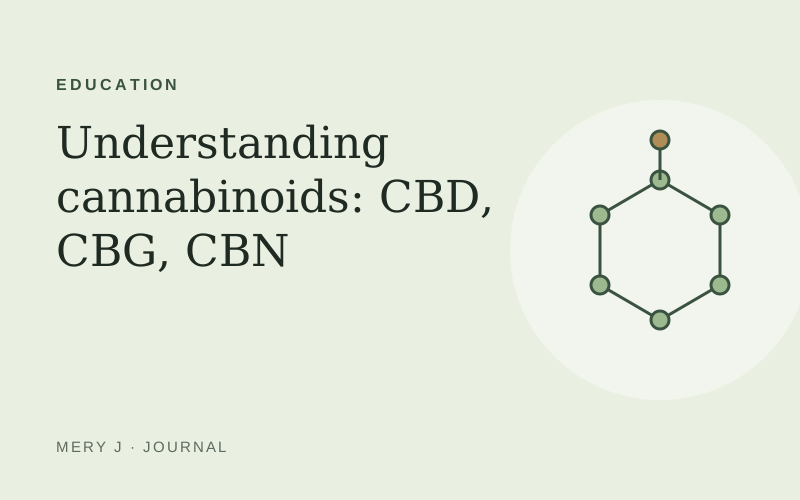
Understanding cannabinoids: CBD, CBG, CBN and the entourage effect
A plain-language tour of the compounds you keep seeing on labels.
Key takeaways
- ✓Cannabinoids are natural compounds from the hemp plant; CBD is the most abundant in wellness products.
- ✓CBG is often called the "mother cannabinoid" and is associated with focus and balance.
- ✓CBN appears as hemp ages and is most associated with rest and sleep routines.
- ✓None of these are intoxicating , that is THC, which compliant hemp products keep below 0.2%.
Hemp contains more than a hundred cannabinoids. You only need to recognise a few to read a label confidently.
CBD (cannabidiol)
The headline compound in almost every wellness product. Non-intoxicating, generally well tolerated, and the one whose milligram strength you see on the front of the bottle. People reach for it most often for everyday calm and balance.
CBG (cannabigerol)
Known as the "mother cannabinoid" because other cannabinoids are formed from it in the growing plant. It is present in small amounts in full- and broad-spectrum extracts, and is commonly associated with focus and a sense of steadiness.
CBN (cannabinol)
CBN forms gradually as harvested hemp ages and oxidises. It is the cannabinoid most often linked to evening and sleep formulas, frequently paired with CBD in night-time products.
How they work together
In full- and broad-spectrum products these minor cannabinoids sit alongside CBD and the plant terpenes. Many people find the combination more rounded than CBD alone , the entourage effect. Isolate, by contrast, gives you CBD and nothing else.
Frequently asked
- Are CBG and CBN intoxicating?
- No. Like CBD, they are non-intoxicating. Only THC is intoxicating, and compliant hemp products keep it below 0.2%.
- Is CBN just for sleep?
- It is most associated with rest and is common in night-time blends, but it is not a sedative and effects vary by person.
This article is general educational information and not medical advice. CBD is a food supplement and is not intended to diagnose, treat or cure any condition. Consult a healthcare professional if you take other medication.